
Published November 25, 2025 09:43AM
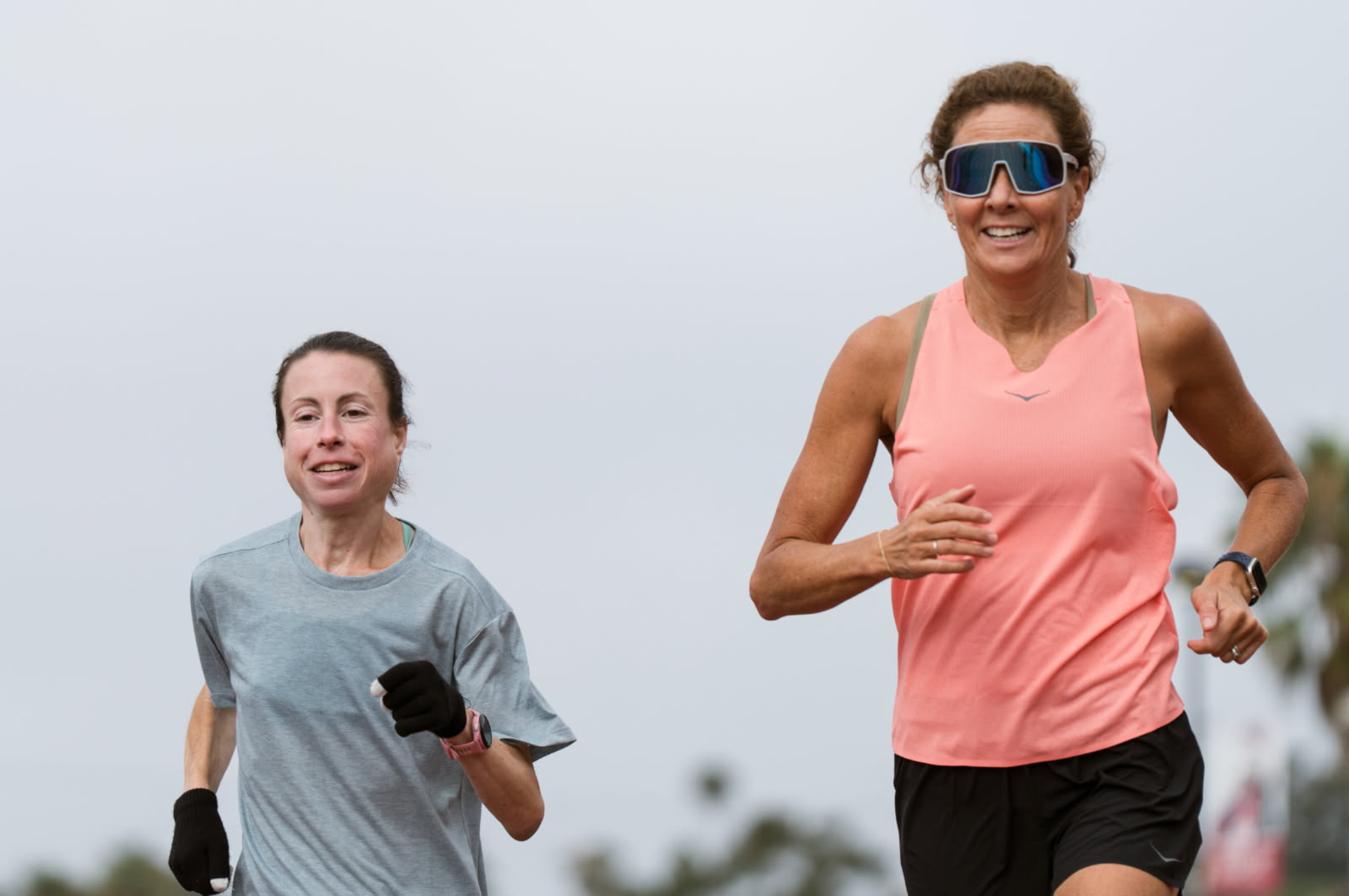
Fellow writer/runner Amber Sayer and I sat in a room with other writer/runners back in July. We were both part of a media gathering to kick off a few months of training for the Santa Barbara Half Marathon. When asked what our race goals were, we both answered: “To stay healthy and enjoy running the race.”
As we headed to the track for a group workout, Amber and I got to talking about running injuries. Neither of us meant that we struggle with common runner ailments like plantar fasciitis or IT Band Syndrome. As it turns out, both Amber and I have a form of Ehlers-Danlos Syndrome, a connective tissue disorder that affects, at minimum, one in 5,000 Americans—a conservative estimate, since most people don’t know they have it.
Our running lives have had to adapt to the issues caused by the hypermobility disorder, but we continue to enjoy the sport we love. Since our diagnoses, we’ve learned a lot. Here’s what you should know about this oft-misunderstood syndrome.
What Is Ehlers-Danlos Syndrome (hEDS)?
Ehlers-Danlos Syndrome encompasses 13 recognized subtypes, from vascular EDS (vEDS) to the most common hEDS (the “h” standing for “hypermobile”), and has varying degrees of symptoms and severity. The spectrum is wide.
Dr. Valerie Iovine Rogers, PT, DPT, Program Manager at Icahn School of Medicine’s Center for Recovery from Complex Chronic Illness (CoRE) at Mount Sinai, explains that for people with hEDS, connective tissues such as tendons and ligaments are more elastic than they should be. This makes them less efficient at transmitting force, which in turn changes how the body stores and releases energy with every step.
“The structures within your body that are supposed to hold joints stable are [too] stretchy and cause other structures to brunt the load, and [these other structures] don’t do it quite as well.”
This causes a cascade or chain reaction through the body, starting from the feet and working all the way up through the pelvis and spine.“One local change at the foot ripples up the chain, and in hEDS that ripple is amplified,” noted Dr. Rogers. “None of this means a runner with hEDS cannot run. It means we need smarter inputs to create the stability that the tissues do not automatically provide.”
Our Diagnoses
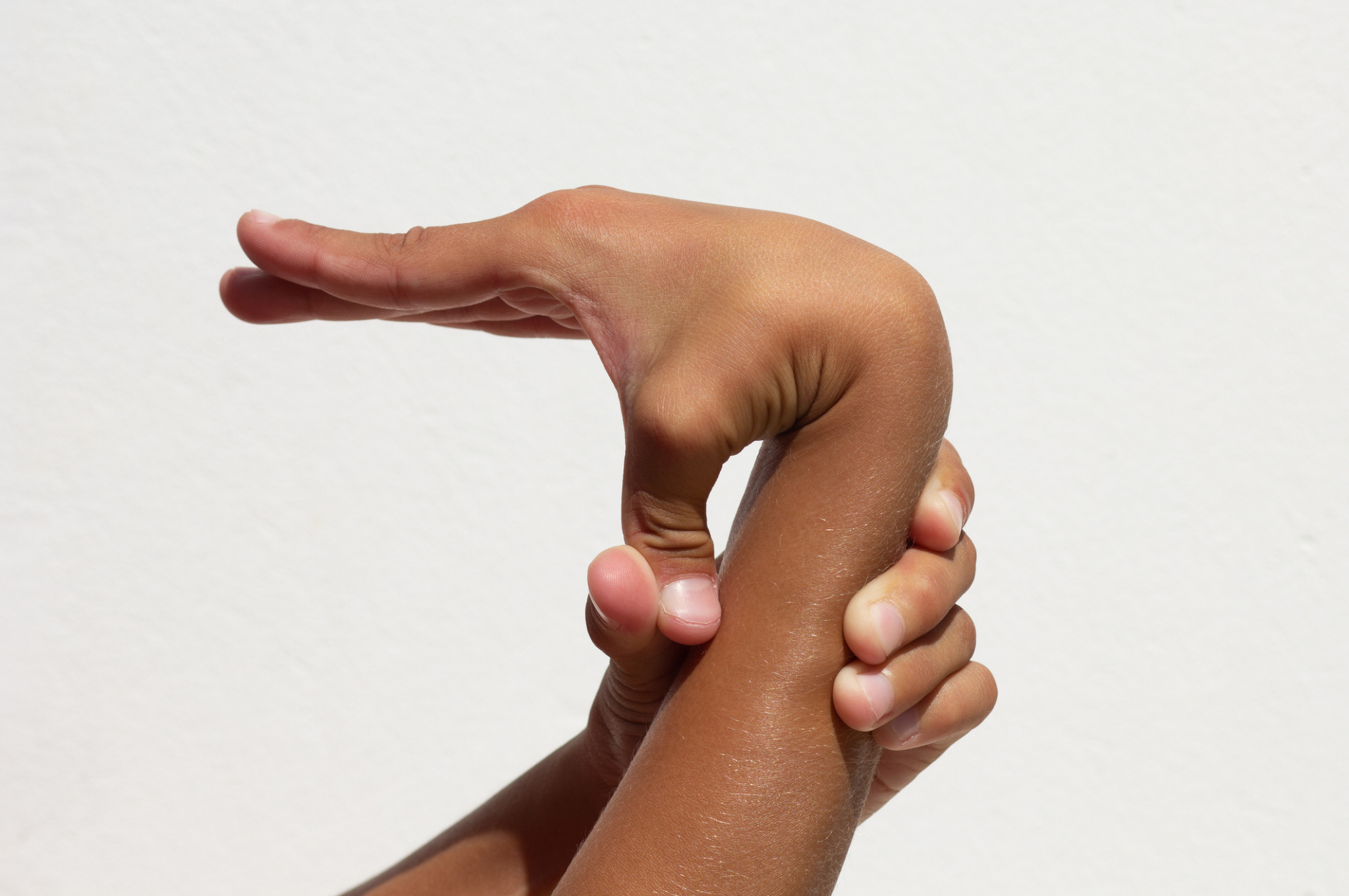
Lisa: I was first diagnosed with EDS about 10 years ago when I was seeing a Physician’s Assistant for a wrist sprain. When I showed her my hyperflexible wrist, she made what I later learned was a reckless comment: “You have Marfan Syndrome.” While Marfan shares some of the same symptoms as hEDS, it can come with a heart disorder and other very serious ailments. However, being misdiagnosed is not uncommon. According to a 2023 study, it takes people with EDS an average of 10 years and 15 doctors to get a proper diagnosis.
My general practitioner downgraded my diagnosis to hEDS after an assessment of the flexibility of my joints. He used what’s known as the Beighton Scoring System while having me stretch my pinky joint, my wrist/thumb, assess the angle of my elbow with my arm straightened, locking out my legs to assess my knees, and touch the floor (testing my spine).
With the diagnosis, many injuries from my past—a hyperextended elbow injury as a teenager playing volleyball, a subluxated cuboid bone in my foot—made sense. And when I ran the LA Marathon during my senior year of college, I suffered through hip and low back pain that I was sure wasn’t normal. It all made sense.
I’ve since learned that I need to do constant maintenance to stay healthy as a runner: foam roll, strength train, and mostly stick to trail running. The repetitive motion of road running tends to strain my body more than the varied challenges of trails.
Amber: I was diagnosed in 2016 by a rheumatologist after seeing a string of other rheumatologists for one-off joint injuries and joint pains that seemed idiopathic in nature (no clear reason why I had the joint injuries) for several years.
My parents had been told that I had “lax ligaments” basically from birth, and I was in custom foot orthotics from the time I was old enough to stand, but the cause of the hypermobility or laxity was not given a formal name. I ran competitively all throughout middle school, high school, and college, with a particularly notable high school career where I won the state championships in cross country and track several years and represented Team USA in the junior Pan American Games in the 5,000 meters.
I went on to run competitively post-collegiately, working my way up to half marathon and marathon distances. I placed third in my age group at the New York City Marathon in 2009, but around that time, I became even more injury-prone than I had always been, and began to experience soreness after running, particularly when I tried to enjoy trails or uneven surfaces.
The formal diagnosis came shortly after I was diagnosed with autism spectrum disorder. Interestingly, the rheumatologist informed me that hypermobile Ehlers-Danlos syndrome is often comorbid with autism spectrum disorder.
Running With hEDS

Dr. Rogers notes that runners with hEDS experience two things at once: exaggerated interdependence between regions (body parts) and a larger available range of motion.
“The result is more micro-motion at joints, earlier technique breakdown when fatigued, and more work placed on passive structures that were never meant to be the primary stabilizers,” she says.“The instability and incorrect placement that can fall on the joints can be really painful in itself.”
Not only are these joint stresses painful, but they can also cause dislocations or subluxations, which are essentially partial dislocations where the joint shifts out of position. Speaking for myself personally (Amber here), my ankles are very prone to subluxations, especially when I’m sleeping (non-weight bearing), so I wear night splints to try and encourage the bones to stay in the correct alignment.
Dr. Rogers further explains that having extreme laxity in the connective tissues can lead to tendinopathies at the Achilles, posterior tibialis, patellar, and gluteal tendons due to these tissues trying to stabilize the joint but lacking the normal stiffness to do so.
Ligaments connect bones to each other, and Dr. Rogers likens the ligaments of those with hEDS to a rubber band. That laxity puts more stress on tendons, which connect bones to muscles. “The tendon may brunt the force,” she explains. “While muscles can be trained to stabilize the joint, jumping right into high-impact activities makes that difficult for accommodation. It can result in bone stress if mechanics and loading progress too quickly,” she says. Weight-bearing joints suffer “if impact outpaces strength,” she says. Control of body movements suffers, and those with hEDS can even experience headaches and neck pain from fighting for head control because the chain below is fighting to stabilize.
Training for—and Racing—a Half Marathon
Lisa: While testing racing supershoes (and running in eight different models during one run—each one for a half-mile), I torqued my hips twice. They were out of alignment, my high hamstring was killing me, and I had a half marathon planned two months away. Luckily, I had Hoka NAZ Elite Coach Jenna Wrieden on my side. When I told her my predicament, she assured me that we could get creative with training. I assured her that I was used to that. For the first month, I swam, aqua-jogged, lifted weights, and hiked.
Amber: I have chronic, end-stage arthritis in my talonavicular joint, one of the key joints at the foot/ankle complex. This means that on top of all of the challenges of running with hEDS, I have extreme discomfort and immobility at that ankle, which greatly compromises my stride. It impedes my ability to run most days, so when I met with Wrieden, we decided I had to take a “day-to-day, see-how-my-body-feels” approach to my training.
Additionally, I trained and raced in a more supportive and maximalist running shoe (for me, it was the Hoka Bondi). The thicker stack height and additional stability help provide some leniency for the extreme lack of mobility in my ankle and foot, which otherwise does a very poor job absorbing stress properly when I land.
Wrieden worked diligently with both of us to ensure we had a solid aerobic base and routine strength training and yoga exercises to keep our alignment and strength adequate to handle the high-impact, vigorous nature of running.
The Three Pillars of Training With hEDS
Progressive training and incorporating strength training and stabilization exercises are particularly key for runners with hEDS. Dr. Rogers refers to what she calls the “three pillars,” which are: stabilize, sense, and self-manage.
Stabilize
“Here is where strength training comes in,” Dr. Rogers says.. “We want to strengthen the body in positions that mirror running mechanics.” Both of us (Lisa and Amber) incorporated two days a week of strength training into our training routines, and we knew the importance of not skipping those sessions.
Sense
While strength training is important for all runners, “sense” work is crucial for runners with hEDS because of the lack of proprioception (your body’s sense of where your limbs are in space) that tends to be fuzzy due to the elasticity of connective tissues around the joints. This means that the ligaments and tendons, which have receptors in them to provide the brain with feedback about position, tension, and stretch, can’t provide proper feedback, so the brain doesn’t always know exactly where “neutral” is. “That’s a big deal for runners. Every stride depends on split-second coordination,” Dr. Rogers says. “If your body doesn’t know exactly where the foot or knee is landing, you’re more likely to overstride, twist, or lose efficient alignment, which adds strain and energy cost.”
She says that runners with hEDS need to train this sense with balance work and dynamic control exercises. This can include basics like single-leg balance, balancing on uneven surfaces, and even more complex exercises like trail running. (Lisa relies on this to keep her sense of proprioception strong, and because she loves it.)
Self-manage
Lastly, we can both attest to a high need for self-management. “Learn your common subluxation patterns and how to reduce or correct them safely,” Dr. Rogers says.“Early recognition and simple self-corrections can prevent a small hitch from becoming next-day pain or cascading into that regional interdependence spiral we spoke about earlier. If form falters or joints feel wobbly, switch to a walk interval, a hill hike, or call it for the day and move to cycling or pool work.”
The Race Experience

We were both thrilled by the ultimate outcome of this running experience, largely owing the success to the flexible guidance of a great coach.
Lisa: On race day, I was giddy to be there, happy to toe the line. I chalk up my success that day to only running twice a week, doing strength training twice a week, and paying close attention to my body through the process. And I count my lucky stars.
Amber: While I wasn’t able to travel to the actual race, I did participate virtually. On a chilly pre-dawn morning, I took to the dark streets. I was unsure of whether or not I would be able to run all 13.1 miles without stopping since I had come nowhere near that distance in training, but I put my faith in my body and the aerobic base I had built kept the pace as steady as I could, using the first mile as a slower warm-up and then transitioning into a comfortable, even pace for the next 12 miles. I was so pleased to finish without stopping or slowing down.
Community Matters
Dr. Rogers says a sense of community and camaraderie make running with hEDS a bit more manageable. “Seeing athletes with hEDS at the start line and on the trails expands what people think is possible,” she says. “It also gives others with hEDS a blueprint for how to participate in sport on their own terms.”
Both of us found the greatest joy in sharing our half-marathon training journey. Having the support of a coach and the companionship of another fellow hEDS runner through this program helped us both stick with it through the struggles and get to the finish line of the longest road race (or run, for that matter) that either of us has done in a long time.
link