
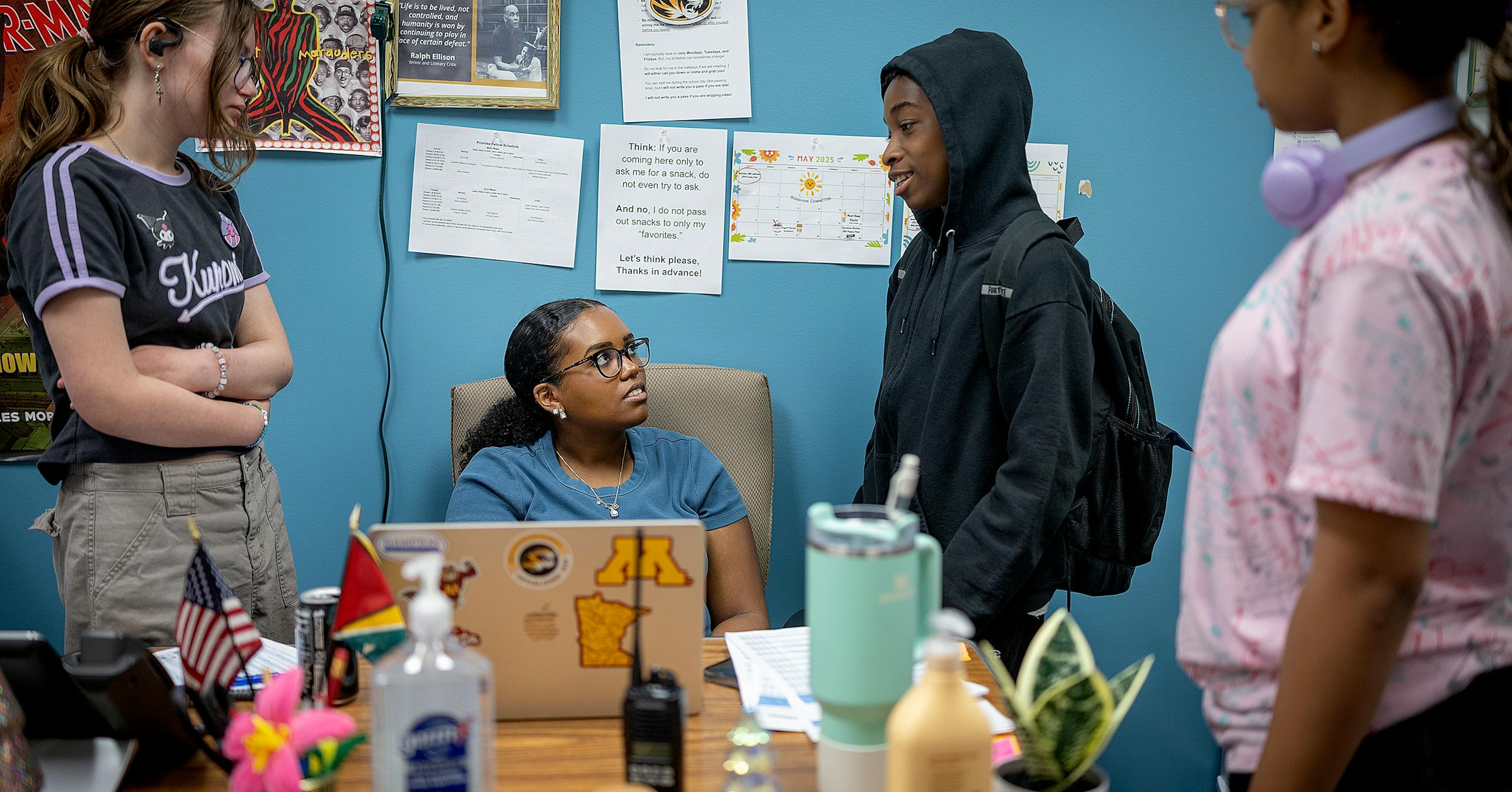
Other school workers are wary of the mental health corps. While members may be passionate and caring, they could end up in complicated situations where their lack of education or knowledge of best practices could have unintended consequences, said Sydney Piras, chair-elect of the Minnesota School Counselor Association.
“The premise of a program like that is great,” Piras said, but “it is always going to be concerning to most professionals in the mental health field themselves, especially if it is connected to education, if individuals are receiving that little training.”
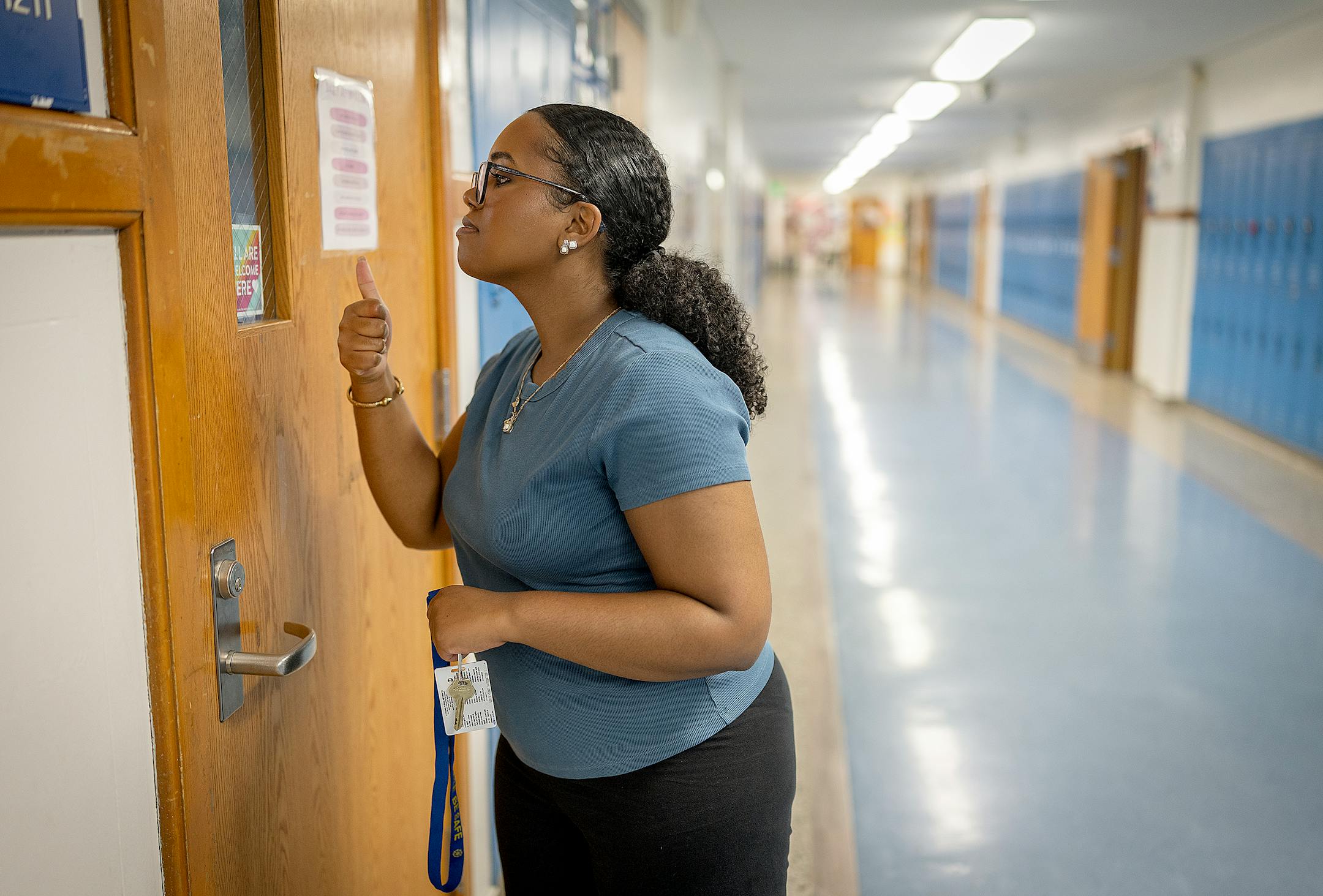
Anjali Hay signals to a teacher to remove a couple of students from her class at Murray Middle School. The corps started as youth mental health needs are dire and there are too few social workers to meet the demand. But the new program, which was set to expand to more states next year, could be in peril. It’s tied to AmeriCorps, which is seeing federal funding cuts. It’s also raised some red flags for counselors, who say the workers need more training. (Elizabeth Flores/The Minnesota Star Tribune)
Piras would like corps members to get a year of training before engaging in mental health and recovery work with young people. Piras noted that many people who had their own mental health or substance use disorder challenges are interested in helping others and stressed that to do the work, “you have to be in a solid place yourself.”
About 20 of the Youth Mental Health Corps members in Minnesota are 18-to 29-year-olds who work at nonprofits and other organizations serving people with substance use disorders through AmeriCorps Recovery Corps. That program has “rigorous” training of more than 40 hours and participants need one year of sustained recovery before becoming a navigator who can assist people with goals and resources to support their recovery, said Alana Stimes, who works with Recovery Corps.
Another 45 members are AmeriCorps Promise Fellows, ages 18 to 24, who work in schools or community organizations, like YMCAs, to help kids who are struggling and keep them in school. In addition to the training they typically receive, the fellows also did the eight-hour mental health first aid certification this year, said Kate Suchomel, with the Minnesota Alliance With Youth, which runs the Promise Fellows program.
The certification helps them identify whether a student is struggling with a mental health crisis, provides tips and tools on how to approach the student, help them express their feelings and connect them with a mental health professional, Suchomel said. She said the corps members fill a sweet spot.
link