
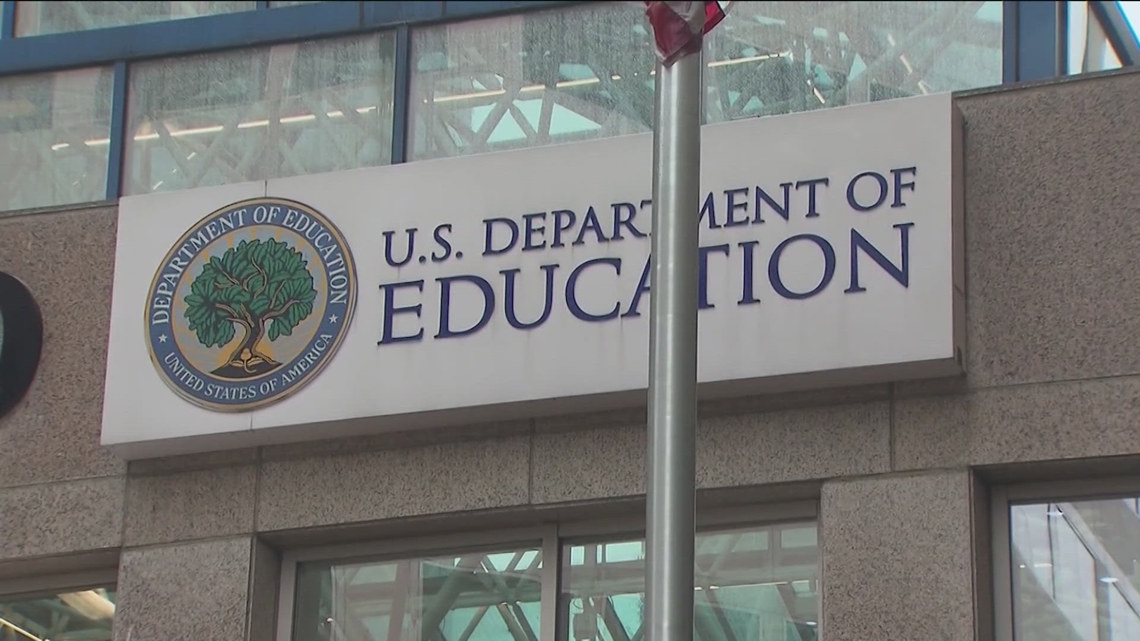
Programs run by the University of Minnesota and Rochester Public Schools will no longer be funded under the Trump administration.
MINNEAPOLIS — Multiple programs in Minnesota are losing federal grants for school mental health resources as part of sweeping changes under the Trump administration and the U.S. Department of Education, which plans to redirect the funds by the end of the year.
The $1 billion in mental health grants were allocated by Congress through the Bipartisan Safer Communities Act, a law signed by former President Biden in 2022 in the aftermath of the mass shooting in Uvalde, Texas. The legislation was negotiated with the support of both Democrats and Republicans, but earlier this year, the Trump administration cited discriminatory and race-based practices as the reason for ending some of the grants.
The cuts included mental health programs for the Rochester Public Schools as well as the University of Minnesota School Psychology Program, which created two projects known as Project LIME and Project AWARE in partnership with Minneapolis Public Schools, Saint Paul Public Schools and South St. Paul Public Schools.
After the shooting at Annunciation Church in Minneapolis last week, school mental health services have been in the spotlight as part of the discussion to prevent mass shooters from carrying out future violence. At a news conference on Tuesday advocating for an assault weapons ban, Bloomington Mayor Tim Busse specifically cited the termination of school mental health grants by the Trump administration.
“If you truly believe that mental health is part of the solution here, if you’re not just swapping out ‘thoughts and prayers’ for mental health solutions,” Busse said, “it’s time to speak up.”
Faith Miller, an associate professor with the University of Minnesota School Psychology Program, said her two grants were each worth more than $5 million over five years and allowed graduate students the opportunity to provide mental health services in schools for 10 to 20 hours per week. She said the program was designed to address the shortage of school psychologists and bolster mental health systems within public schools. According to a description of the projects, the programs were also intended to “increase the number and diversity of fully qualified school psychologists.”
The grants were scheduled to run until 2027 before the U.S. Department of Education informed Miller and her colleagues that their remaining funds had been terminated.
“These funds were providing resources to be able to provide teams of students that we could deploy into high-need buildings in districts, to better support student health,” Miller said. “It’s just really unfortunate and really unexpected. I don’t think that student mental health is a partisan issue.”
Meanwhile, in the Rochester Public Schools, Superintendent Dr. Kent Pekel published a letter in May criticizing the Department of Education’s decision to terminate a Rochester program to help license staff to provide mental health services in schools.
“The $1.9 million federal grant to RPS was designed to address the profound mental health crisis that is affecting students in every community and from every background across the United States today,” Pekel wrote. “Toward that end, the federal funds are helping to fill a gap that Rochester Public Schools cannot fill on its own: enabling talented people who are already working in our school system to earn the licenses and degrees that they need to provide students with counseling and other forms of mental health support.”
The University of Minnesota School Psychology Program and Rochester Public Schools both appealed the termination of their grants to the U.S. Department of Education. A spokesperson for Rochester schools said they had not heard back yet from the Trump administration, while Faith Miller with the U of M said the appeal for one of her projects had already been denied.
A spokesperson for the Department of Education said the $1 billion in funding was not being canceled. Instead, the department plans to redirect that funding by the end of the year, primarily to fund mental health practitioners in school.
“The Department is strengthening the mental health grant programs and running a new competition to fund mental health practitioners on the ground working with local schools and students,” Deputy Assistant Secretary for Communications Madi Biedermann said. “This is a departure from the Biden Administration’s implementation of the program that instead focused on illegally awarding grants based on the mental health professionals’ race or sex.”
The Rochester Public Schools and the University of Minnesota School Psychology Program both defended their goals around equity and diversity. Superintendent Pekel said the Rochester grant included an “appropriate and common-sense emphasis on helping people of color and Indigenous people earn the degrees they need to provide mental health services in our schools.”
At the U of M, Miller also said it was “unfortunate” that the Trump administration had targeted programs based on diversity efforts.
“I was very disappointed to see that. We know in any profession, having a workforce that represents the individuals you’re serving is a really important thing,” Miller said. “It’s very chaotic, very uncertain, and I think a lot of us are wondering who is going to be paying the costs of this at the end of the day. It’s going to be students and families we’re working to support.”
A coalition of Democratic-led states have sued the Department of Education over the termination of school mental health grants. According to a spokesperson for the Washington Attorney General’s Office, a preliminary hearing in the case is scheduled Friday morning, but the spokesperson added, “to our knowledge, none of the funding has been restored.”
link