
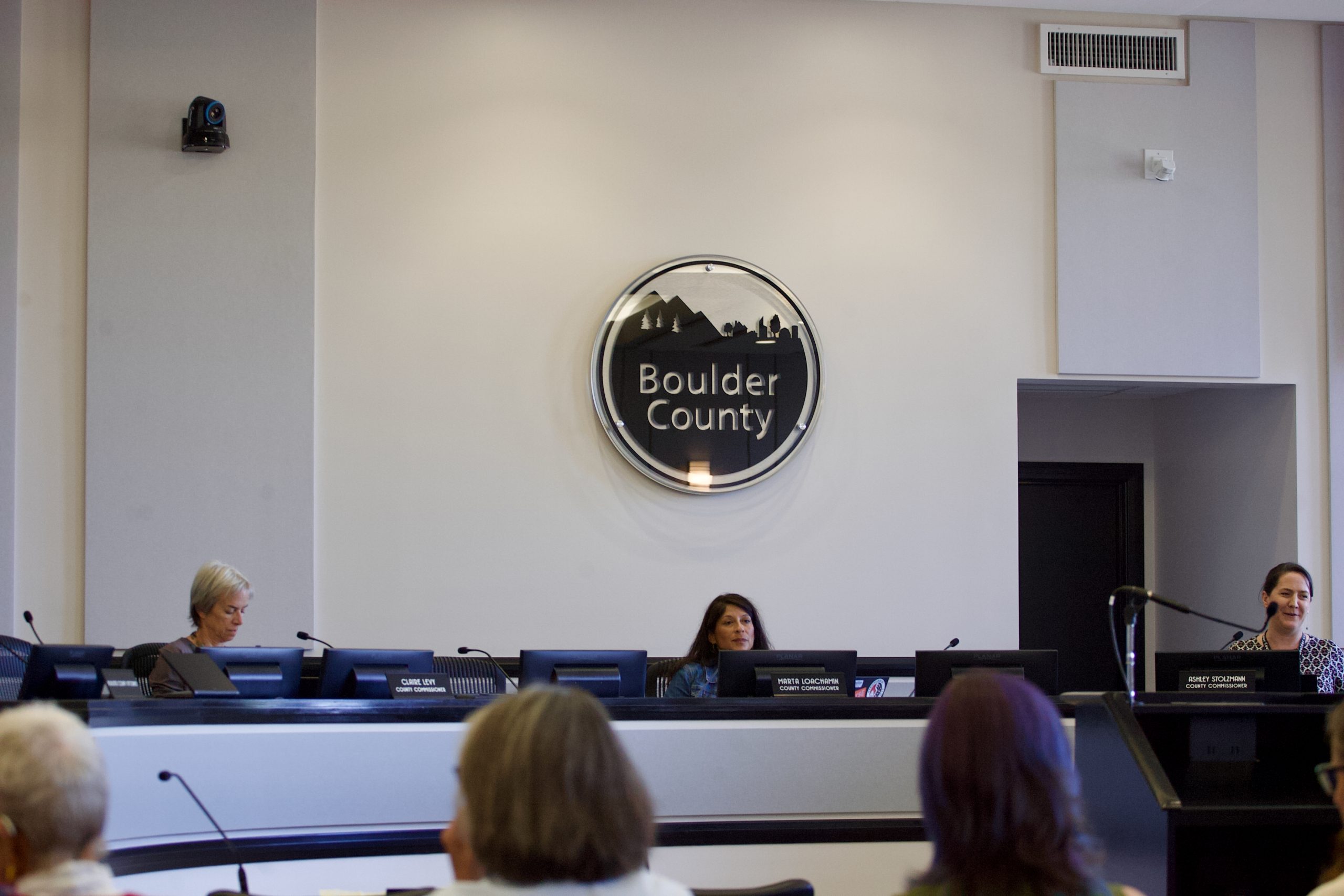
The Boulder County Board of Commissioners on Aug. 19 voted to place a sales tax measure on the November 2025 ballot to fund mental health and addiction treatment programs.
The proposed 0.15% countywide sales and use tax would generate an estimated $13.8 million in 2026, according to a county official. The revenue would fund prevention, crisis response, addiction treatment, recovery services and programs to help residents navigate resources. The money would pay for both county programs and grants to private providers and would expire after five years.
“We cannot take any more time,” Commissioner Claire Levy said ahead of the vote. “To take more time would mean the services that people are depending on will go away.”
Also backing the measure was Commissioner Marta Loachamin, who had previously raised concerns about whether the tax could deliver meaningful change given the wide range of services it would cover. She said she ultimately supported letting voters decide. Commissioner Ashley Stolzmann opposed it.
“I think it’s clear that people have some very different goals about what we should be focused on and what our priorities should be,” Stolzmann said. “It doesn’t seem like this is fully fleshed out at this time.”
The proposal is based in part on the county’s behavioral health roadmap. Some of the revenue would pay for mental health navigation services and a non-police response team for mental health emergencies. Both programs are funded with one-time federal pandemic stimulus dollars slated to run out by the end of next year. County officials said much of the remaining money would go to community-based organizations and not other county-run programs.
“The current cuts and elimination of funding will deepen existing service gaps in an already strained system,” Michelle Webb, behavioral health systems manager for Boulder County, told county commissioners last week. “Service delivery will be impacted without new funding. Boulder County will see a reduction or elimination of critical behavioral health services.”
If voters approve the tax, an advisory board would guide spending decisions, Webb said. She added that the county would create a website showing how funds are allocated and launch a strategy to track impacts.
Mental health and addiction frequently rank among residents’ top concerns in local polls. Still, during an Aug. 12 public hearing where more than two dozen people spoke, several urged commissioners to wait until 2026 to give the county more time to decide how to spend the revenue. Some said more of the money should be used for more transformative projects, such as long-term residential treatment beds for people with serious mental illness, a major gap in Boulder County.
“I think it is going to maintain the status quo,” state Sen. Judy Amabile, who has long pushed for more state investment in residential treatment, told county commissioners. She opposed the measure.
On July 31, most members of the Boulder City Council also said they were not ready to support the tax, arguing the measure needed more time to be fleshed out. Several cited concerns about repeating the experience of the 2023 Affordable and Attainable Housing tax, some of which was used to support existing programs rather than new initiatives.
County commissioners are scheduled to certify the ballot measure and its title on Sept. 5. They are also planning to place a 10-year extension of an open space tax on the ballot.
Related
link