
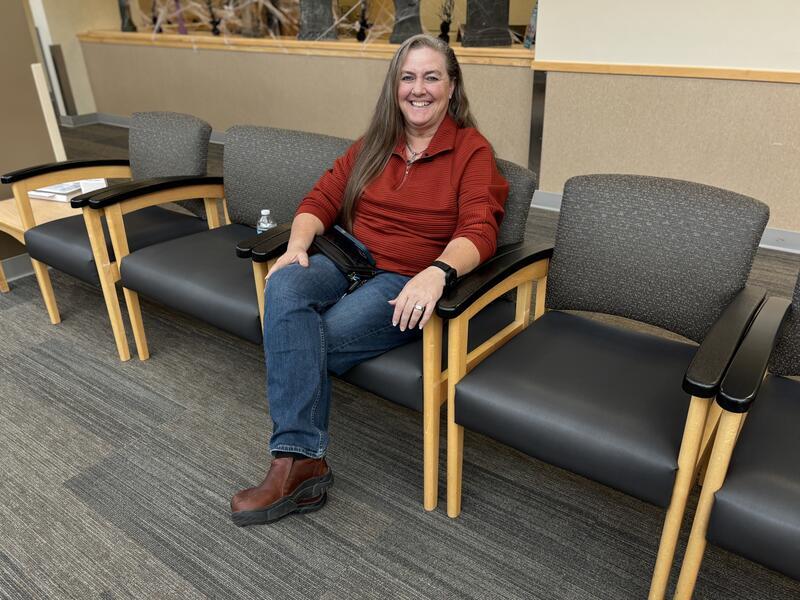
Nikki Woodring is glad she turned 50.
She told herself once she hit the big “5-0,” she’d go in to get a comprehensive look at her health.
“I decided, you know what? I just need to go in and have a screening done for everything. Blood work, heart, lungs, everything. Had a mammogram,” said Woodring, who spends her summers in Aberdeen, South Dakota, and her winters in Arizona.
Finding comfort in her care team
After the mammogram, her providers said they’d like her to come in for another appointment.
At the appointment, they confirmed Woodring had breast cancer.
“And that hits you like a ton of bricks because you’re thinking, ‘I’m 50, I’m feeling good, I’m going to go get everything checked just to confirm that I’m good.’ And then that happens,” said Woodring.
“I’ll tell you, (when I) went through the biopsy, the radiology team was so wonderful. So wonderful. I mean, holding me just to support me and telling me to breathe it through,” she added.
Working with a surgeon
After the diagnosis, her team scheduled surgery right away to remove the cancer. Her surgeon was Amy Hiuser, M.D.
Enlarge
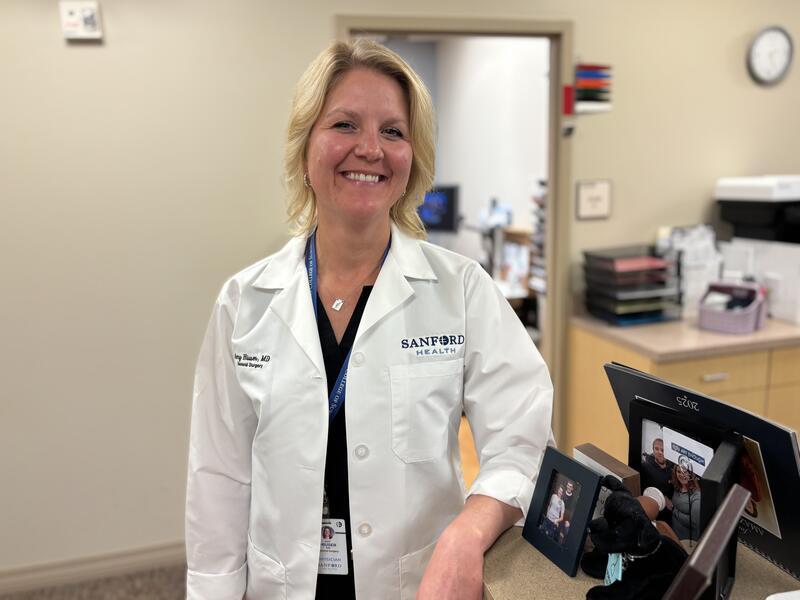
Dr. Amy Hiuser is a general surgeon at Sanford Health in Aberdeen, South Dakota.
Photo by: Simon Floss
Woodring said she couldn’t have been luckier to be with Dr. Hiuser.
“(She) spent tons of time with me, was not in a rush and was very patient. Drew out exactly what her plan was.
“One of the beautiful things, at least coming from a woman’s perspective, is that she took care as far as the cosmetology pieces of it. (She said) I’m going to do this here and this here, and it leaves very little scarring. That’s important as a woman because it’s already an invasive procedure,” said Woodring.
Podcast: Your surgical options after a breast cancer diagnosis
Dr. Hiuser conducted a lumpectomy. She said the procedure removes the cancer and some breast tissue around the cancer, while still leaving a breast.
“I pride myself in making sure it looks like a breast, doesn’t look like a shark bit her, or some sort of disfiguring surgery,” said Dr. Hiuser.
Ductal carcinoma explained
Dr. Hiuser explained that Woodring had a ductal carcinoma in situ (DCIS), which is a cancer that originates in the duct of the breast.
Dr. Hiuser compares the anatomic parts of the breast to “garden hoses and clusters of grapes.”
“The ducts are garden hoses, and the clusters of grapes are the lobules where milk is made and travels through the garden hose (ducts) to the nipple. We’ve got hundreds of these in our breast, and her cancer cells started in the garden hose,” she explained.
Early detection makes ‘gigantic’ difference
Woodring’s cancer was still confined within the duct, or the garden hose as Dr. Hiuser illustrates. Dr. Hiuser was able to remove the cancer through surgery, before it could become invasive or could grow outside of the garden hose.
Again, it’s a good thing Woodring turned 50 and did her mammogram.
“I’m walking and talking proof that early screening is gigantic. Dr. Hiuser even said, ‘This is so treatable right now, but had you come in about eight months (later), we would’ve been talking about other options’ of possibly losing my breasts and things of that nature. So, early screening is huge,” said Woodring.
Her treatment plan consisted of oral chemotherapy and radiation five days a week for four weeks.
Woodring is cancer-free and enjoying the winter months in Arizona.
Learn more:
…
Posted In
Aberdeen, Cancer, Cancer Screenings, Cancer Treatments, General Surgery, Women’s
link